
loser devils, winner freaks
minneapolis's post-mortem on winter // THE DEVIL WEARS PRADA 2's post-mortem on journalism // orson welles might change your life

My goal with this newsletter is to write about new films as they reach general release, along with seasonally appropriate commentary on other cinematic events and interests. It’s sort of a grab bag this week: thoughts on May Day 2026, retrospectives on The Devil Wears Prada via The Devil Wears Prada 2, and some love for a not particularly well-remembered Orson Welles gem. This newsletter comes out every Friday, which this week means Saturday.
A useful alignment axis that I am in the process of patenting but will share with you now is Loser —> Winner / Normie —> Freak. A Normie is someone who keeps their clothes on at parties; a Freak is someone who doesn’t. A Winner is someone who doesn’t have to ask what a winner is; a Loser is everyone else.
This is a great way to assess/offend your friends (try it), but I think it’s also a helpful tool for understanding American cities:
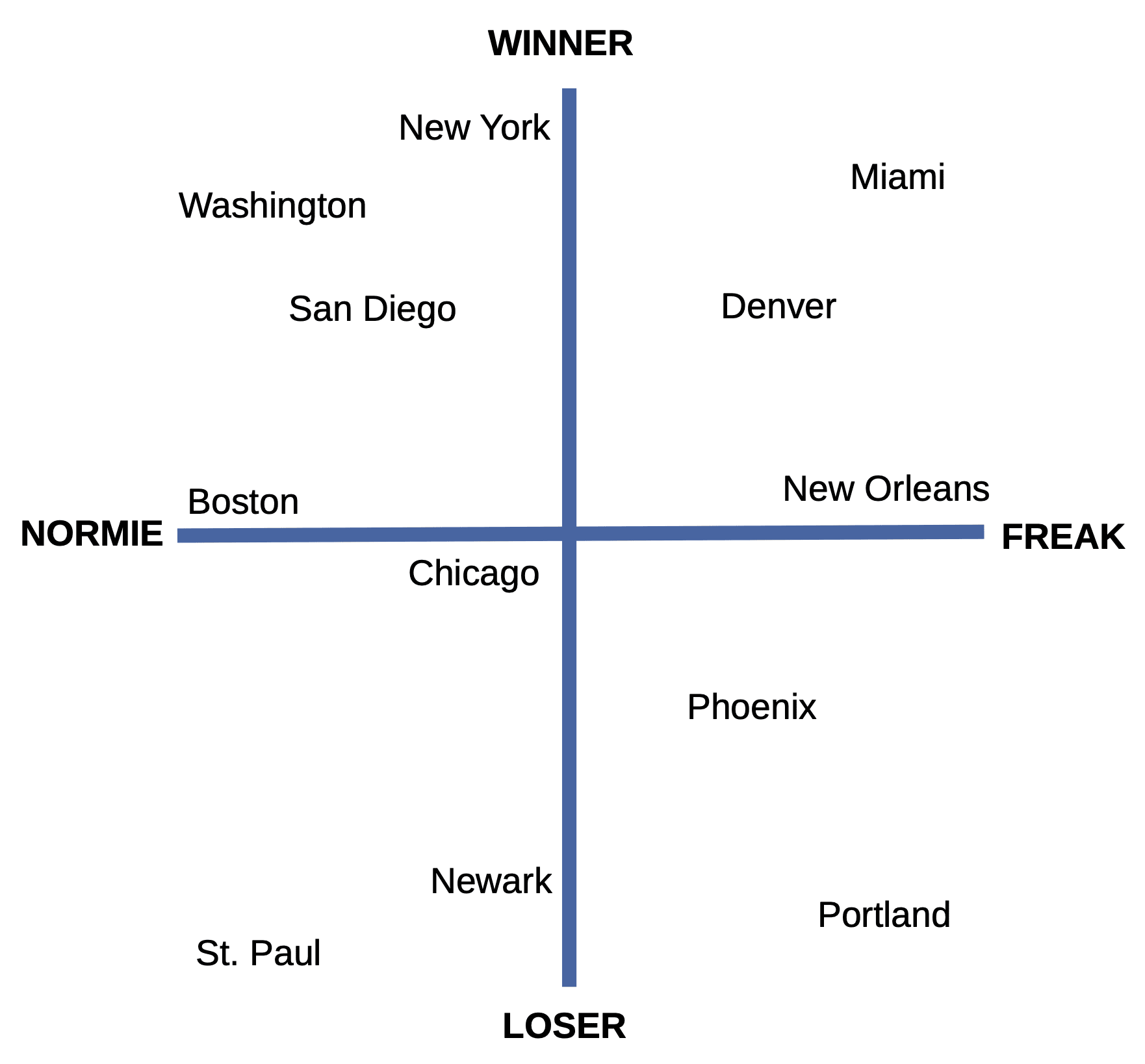
Where to place Minneapolis? Usually it lands just northeast of St. Paul, but every year in early May things swing violently to the freak end of the spectrum, and suddenly a city that has been literally buttoned up for months seems to be entirely made up of people who perform in leftist marching bands and keep life-size dragon puppets in their garage.
Usually “anarcho puppeteer” is textbook “loser freak” behavior, but given that we have three professional sports teams in playoff contention (plus a baseball team that’s at least not in last place doing better than the Mets), I think Minneapolis has entered in its Winner era.1 We beat a long winter, we beat Kristi Noem, we beat the Nuggets, we even beat the Stars. The South Minneapolis May Day parade is our ticker tape before our inevitable defeat in the semifinals.
Things that got me at this year’s May Day -
The newly-wed couple who got married in the morning and incorporated their entire wedding party into the parade.
Hordes of feral children recreating the opening scene of I Saw The TV Glow under a giant trans flag in the middle of Bloomington Avenue. This will be a formative memory for an entire neighborhood of kids that will forever remind them that the streets are theirs and that their neighbors have got their backs.
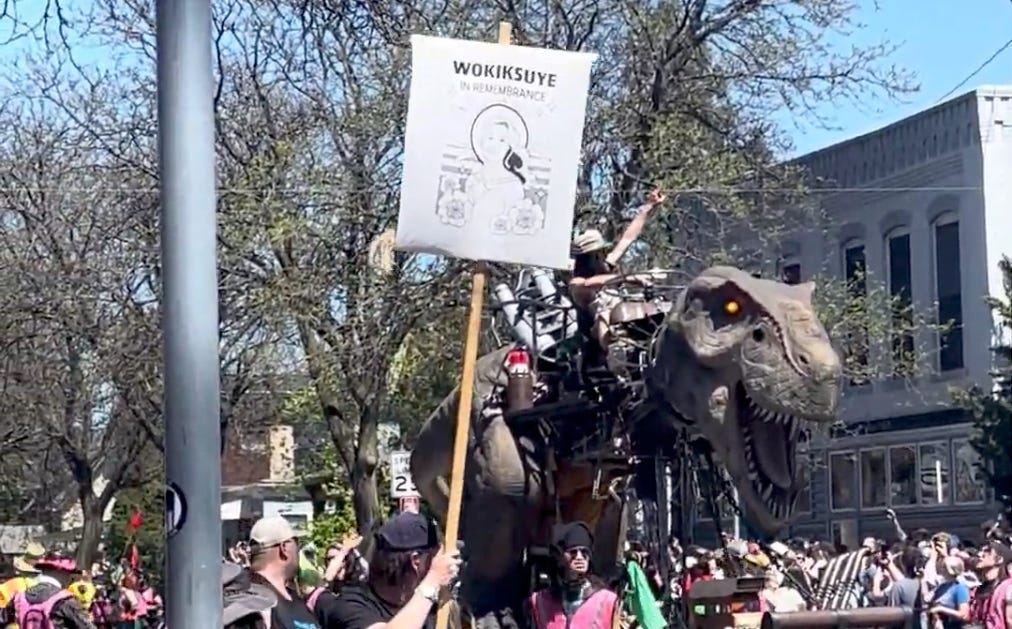
The T.Rex that was parked across the street from where Renee Good was killed, alive and leading off the most fully-functional Battle Train in living memory. It’s crazy to be moved to tears by an animatronic dinosaur. I can’t imagine a better Southside tribute.
I don’t think people living in more meteorologically habitable cities understand just how happy everyone feels here once May hits. Especially after this objectively horrible winter - community and freaks and mobile skate parks/pig roasts/pirate ships are the only way to do it. By this time next week the Wolves will be pulverized by Victor Wembenyama and there will be so much dysfunctional road construction that I’ll regret I ever crossed the Mississippi, but in the post-May Day glow it’s “You Are My Sunshine” forever.
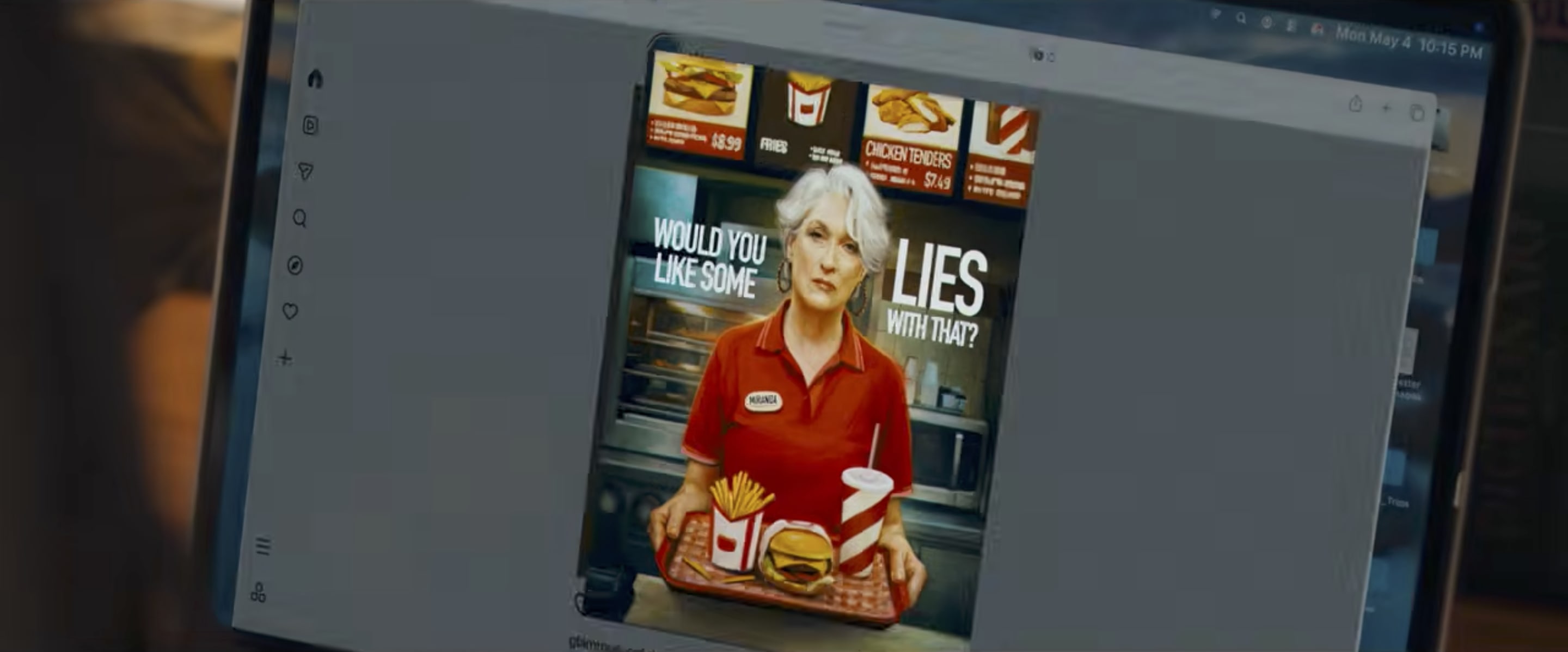
Probably the most interesting thing about The Devil Wears Prada 2 was watching 40-ish-year-old culture journalists spiral this week as their fading career prospects played out on screen. It’s hard to say that DWP2 is anything more than OK, but I can only imagine how seen culture writers must have felt as David Frankel converted their 2006 cinematic avatar into a stand-in for their much less hopeful 2026 selves. I’m a big “Dreams Never End” guy, but - dreams definitely end. Sometimes the best way to drive that conclusion home is to let it enact itself in a lega-sequel.
DWP2 is mostly an excuse to reconsider DWP1, and doing that this week was more rewarding than I anticipated. DWP1 starts with fresh-out-of-j-school Andy Sachs, ready to eat whatever shit she needs to eat to make it in journalism. DWP2 starts with that same Andy getting laid off from her dream job and limping back to the Runway breadline to work as a features editor. The whole gang is still there, led of course by Miranda Priestly, Meryl Streep’s thinly veiled impression of Vogue editor Anna Wintour. The difference is that 2006 Anna Wintour is a whole different devil than 2026 Anna Wintour. The 2006 version was a powerhouse who made the fashion world too scared to participate in a movie that made fun of her. The sequel version is too against the wall to pass up a marketing opportunity, and nearly every fashion house in Europe and America follows. The failure is baked into the premise - the clout of the culture journalism industry is gone, and all that’s left is scrambling for clicks and sponcon.
It’s telling that DWP2 chooses to put a woman in her forties into a 22 year old’s position instead of introducing a new j-school ingenue to take on the changing industry. Why would a young and hopeful person want to get into this business? The only people who can handle the job these days are twenty-year veterans who still don’t get benefits and are willing to get treated like crap by their increasingly irrelevant editors. DWP1 was maybe the last gasp of it being any other way. I was a couple years too young to ever believe that my journalistic dreams would actually come to fruition - I never saw DWP1 as a roadmap to success even though I too moved to New York with multiple journalism awards in college for writing (for fashion criticism, nonetheless). I immediately clocked the landscape as hopeless and spent the year eating pizza and hanging out with my high school friends at Welcome to the Johnsons whenever they came to visit. The journalists of my generation who made it all knew how to hustle the internet. I think I might have been destroyed my life for a few years in a world where gatekeepers were still relevant and print journalism still existed, but I was never funny enough to hack it on Twitter2. The people who defined my life during those years were the Adrian Greniers and the Tracie Thoms who happily took my free merch while giving me shit about how stupid it would be to work more than eight hours a day when you could be hanging out in cheap Midwestern apartments instead.
Rewatching DWP1 and thinking about that time in my life makes me sad and angry that I threw all my dreams away just to hang out with my friends. Watching DWP2 makes me grateful that I did. You know what I got for giving up on my dreams? A pension and health insurance. Do I still want to blow my Midwest American Dream just to get another shot at the cultural criticism industry? Ya, kind of, a little bit. But only in a world where Miranda Priestly is muttering “Why is no one reeeaaady?” under her breath. Not one where she stumbles over the right words for body positivity and has to think about optimized social media feeds.
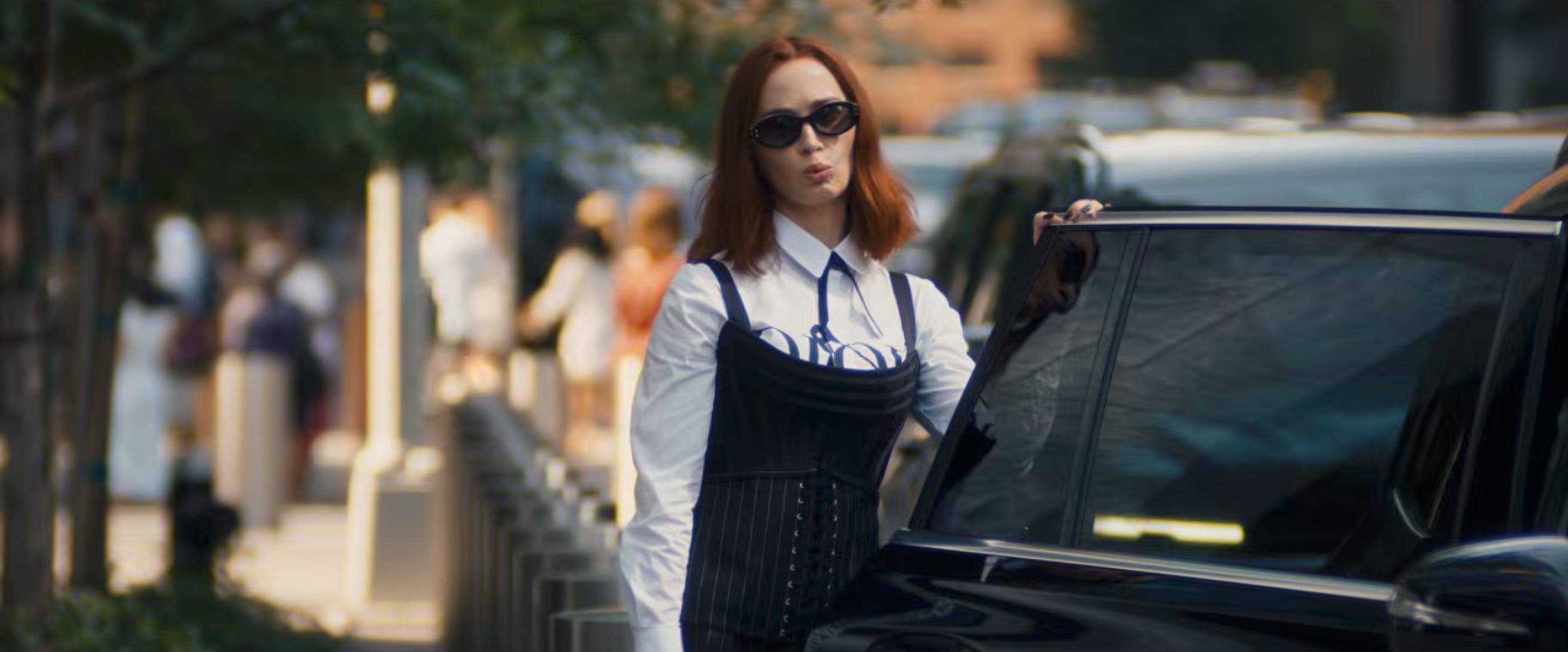
And honestly, to get back to my roots for a second, not one where Dior looks like this. Emily Blunt’s character looked ridiculous in DWP1, but her styling in DWP2 is a testament to the depths to which the house of Dior has fallen in the past 20 years. I’m not a big Galliano fan, but I was all in on Raf Simon’s minimalist takeover in 2012. His debut couture show was a 21st celebration of the original spirit of the New Look, and everything he put out in his three short years was smart, simple, innovative. Maria Grazia Chiuri’s ten-year reign that followed spiraled the brand through questionable production quality, inane appropriation controversies, and boring deconstruction that ultimately resulted in Blunt’s corset and graphic-polo combo in DWP2. Blunt gives a speech about this reduction of luxury fashion into hyper-capitalist branding, and it’s as clear a thesis for DWP2 as the cerulean speech was for DWP1. It’s fitting that a fake Lauren Sánchez’s delivers that thesis instead of a fake Anna Wintour.
Dior converted hands to Jonathan Anderson just after DWP2 ended shooting, and both his inaugural couture and RTW collections indicate a return to the intelligent precision that once defined his brand. So there’s some promise in the future. But DWP2 is a document of twenty pretty dreadful years of American culture. Less a good time at the movies than a reminder of diminishing returns, it’s not sharp or interesting enough to do much more than enact its own cynicism. I think it ends on the pro-boss capitalist success story that the original ends on, but I fell asleep for the final twenty minutes, so I’m assuming that based on foreshadowing and the general vibe of my standing-room-only theater. The looks are silly, the cinematography is ugly, the script is dull. But it serves pretty competently as a data point for how culture journalism perceives itself in 2026. That’s not exactly a sales pitch, but 20th Century Disney doesn’t need it. They’re selling their movie off 2006 dreams alone, which are maybe this industry’s only hope.
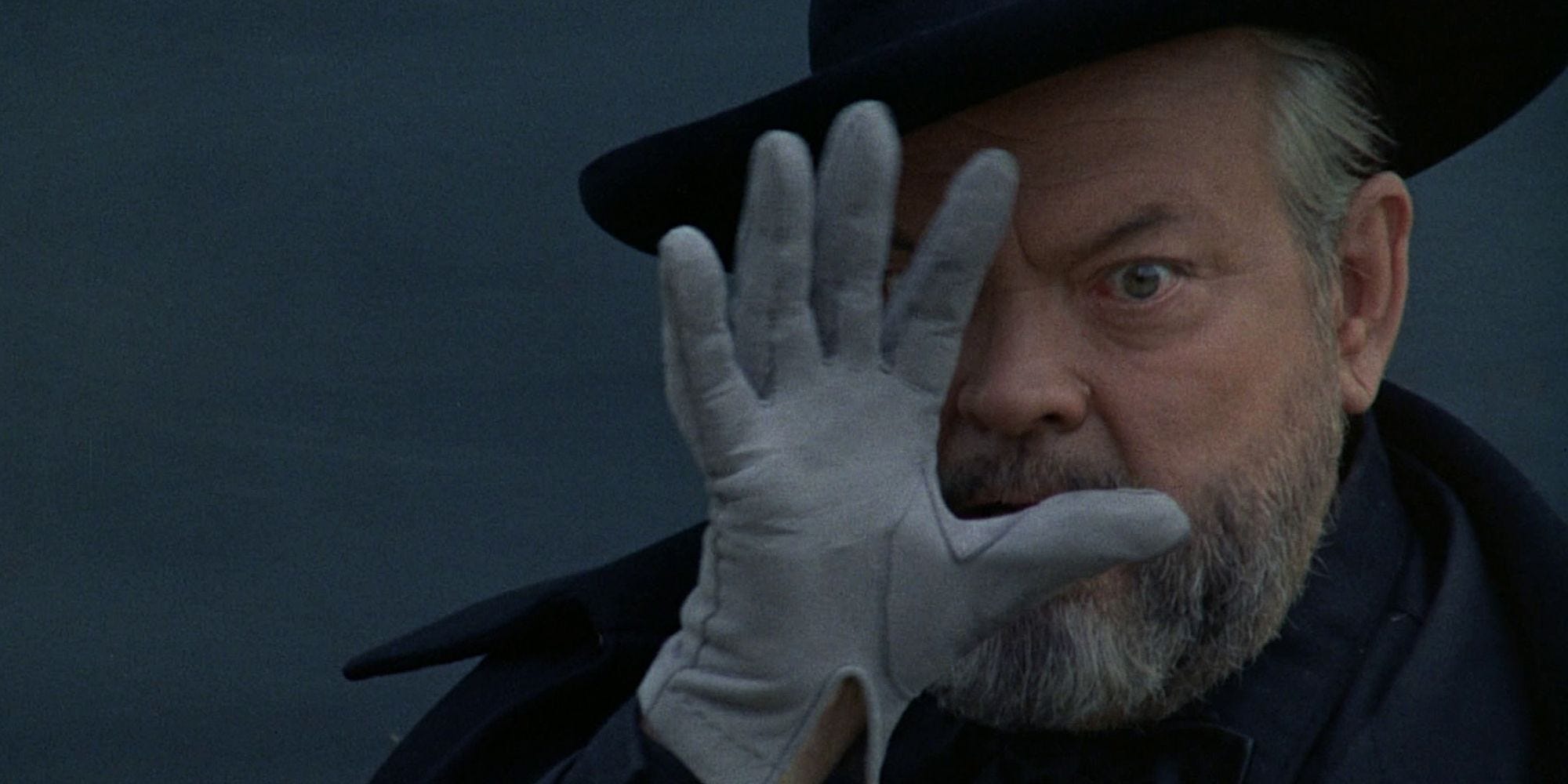
I’m doing extensive research for the MOVIES ABOUT STEALING bracket, and there are a lot of decent movies out there that won’t make the cut. One of those that I want to alert everyone to is the late Orson Welles pseudo-documentary F for Fake. My appreciation for Welles was undercut by early exposure to the champagne commercial outtakes and the trivia fact that his last film role was the voice of Unicron in The Transformers: The Movie. Citizen Kane doesn’t do a lot for me, so it’s been hard to read him as anything other than a guy who went from being a blowhard with great cinematography to a blowhard with a high blood-alcohol content.
F for Fake doesn’t exactly eliminate those presumptions, but it puts a face to the kind of person who might find it hilarious to blow a legendary reputation on late-career crap. Sort of a documentary but more an experiment in postmodern meta-fiction, F for Fake sort of tells the story of Orson Welles making a movie about biographer Clifford Irving writing a book about legendary art forger Elmyr de Hory. The problem is that Irving is himself a legendary fraudster best known for writing a fake memoir of Howard Hughes, and Welles is a self-described charlatan with no interest in telling a straight story. It’s a chaotic experiment in truth and lies that features Welles sloshing red wine all over his fabulous friends, cinematic magic tricks, and tons of footage of 1970s Ibiza. Just as it winds itself into a nihilistic hole, Welles busts in with a Shakespearean monologue about the endurance of the Chartres Cathedral that will absolve any anxiety you might have about the passage of time and the endurance of human society. Really beautiful stuff.
Welles’s particular interrogation of the value of the artist plays with a lot of the things that David Lowery invokes in his examination of parasocial personalism in Mother Mary and sets up the docufiction experiments that Sophy Romvari plays with in Blue Heron. All of this really gets my brain whirring, but I want everyone to have the opportunity to see these movies before I start chatting about them. So 1.) check out F for Fake on the Criterion Channel; 2.) figure out where you can see Blue Heron this weekend. Around here that’s the Main, starting yesterday. I hope you love it.
Thanks for reading *life is disappointing.* If you found this newsletter slightly less disappointing than the rest of your life, consider liking, commenting, sending me money (thanks!) or subscribing. Subscribing will get you exactly what you get here but sent to your email inbox. I’ll be back next week with more to say about Sophy Romvari, Blue Heron, and the next phase in meta-fiction.
St. Paul will stay normie loser for life even if the North Stars move back home and every high school gymnasts in town wins Olympic gold.
I lived in New York the year Vox came onto the scene. I remember filling out an application in my brother’s attic thinking I might be able to get in on the ground floor until I got to the part where it said “share your best tweet with us.” I don’t think I ever submitted the application.
Gold Star for footnote No. 2 #;-) Made it worth reading all the way to the end ... as usual.